Related Resources
Take your learning further with these popular English study packs.
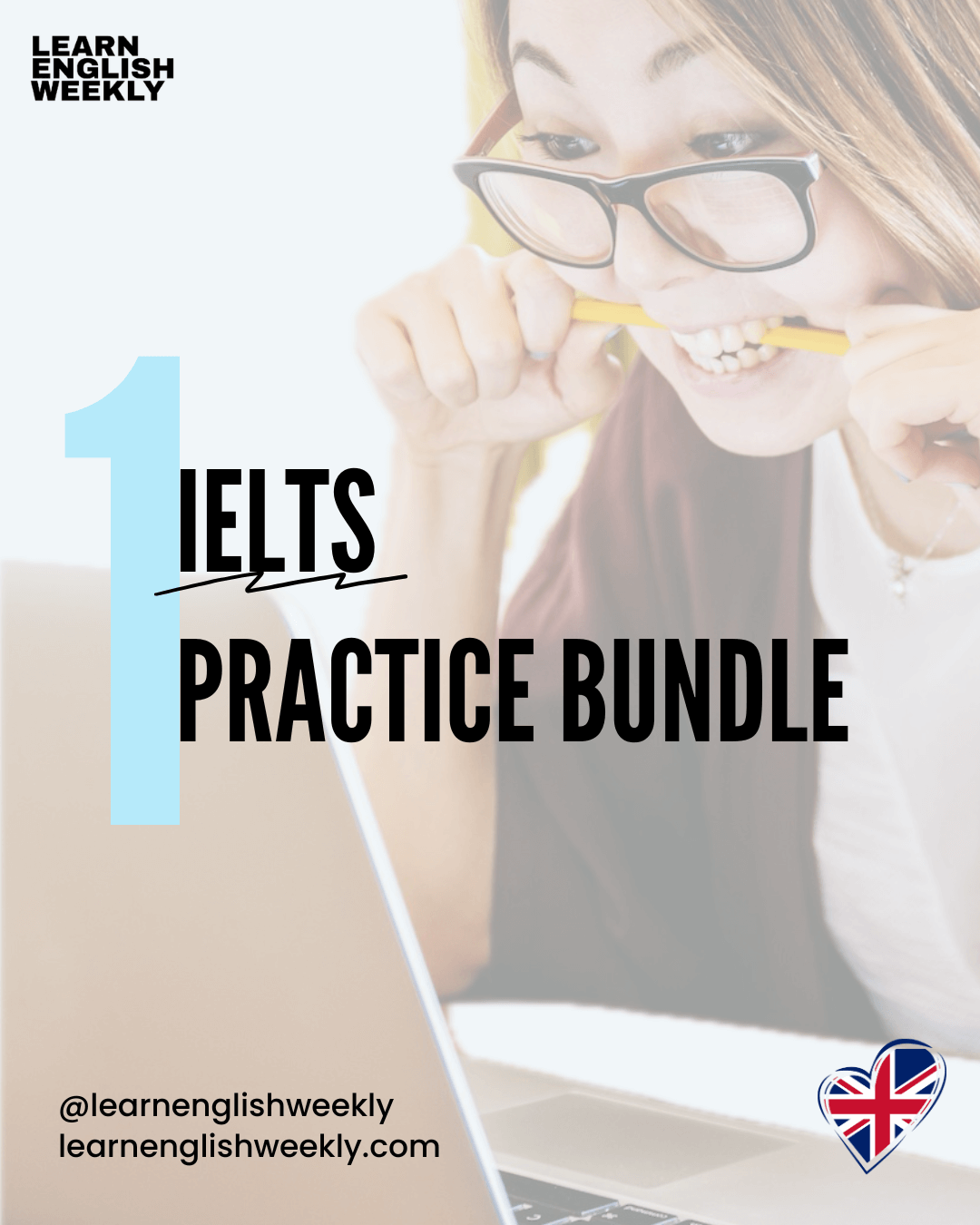
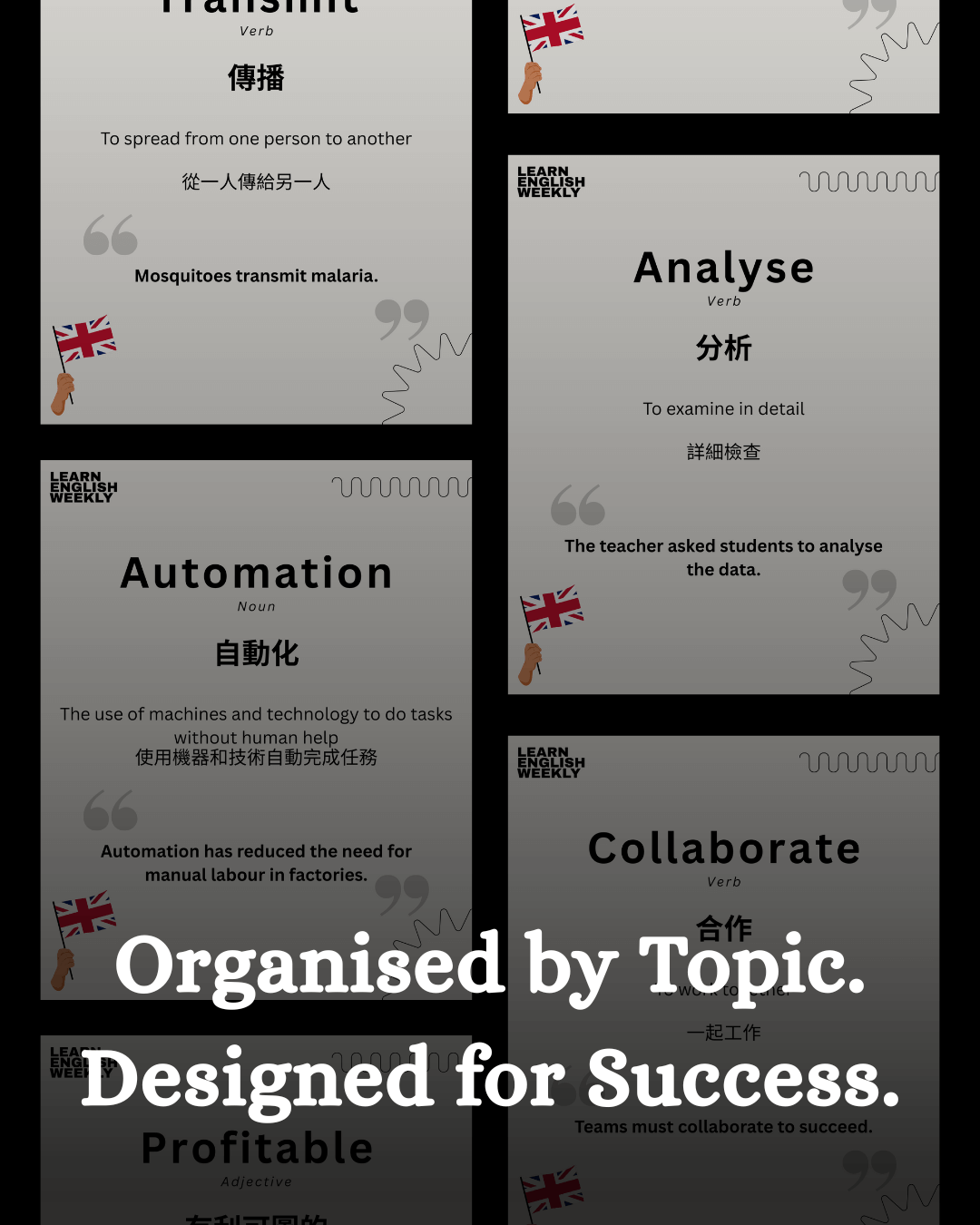
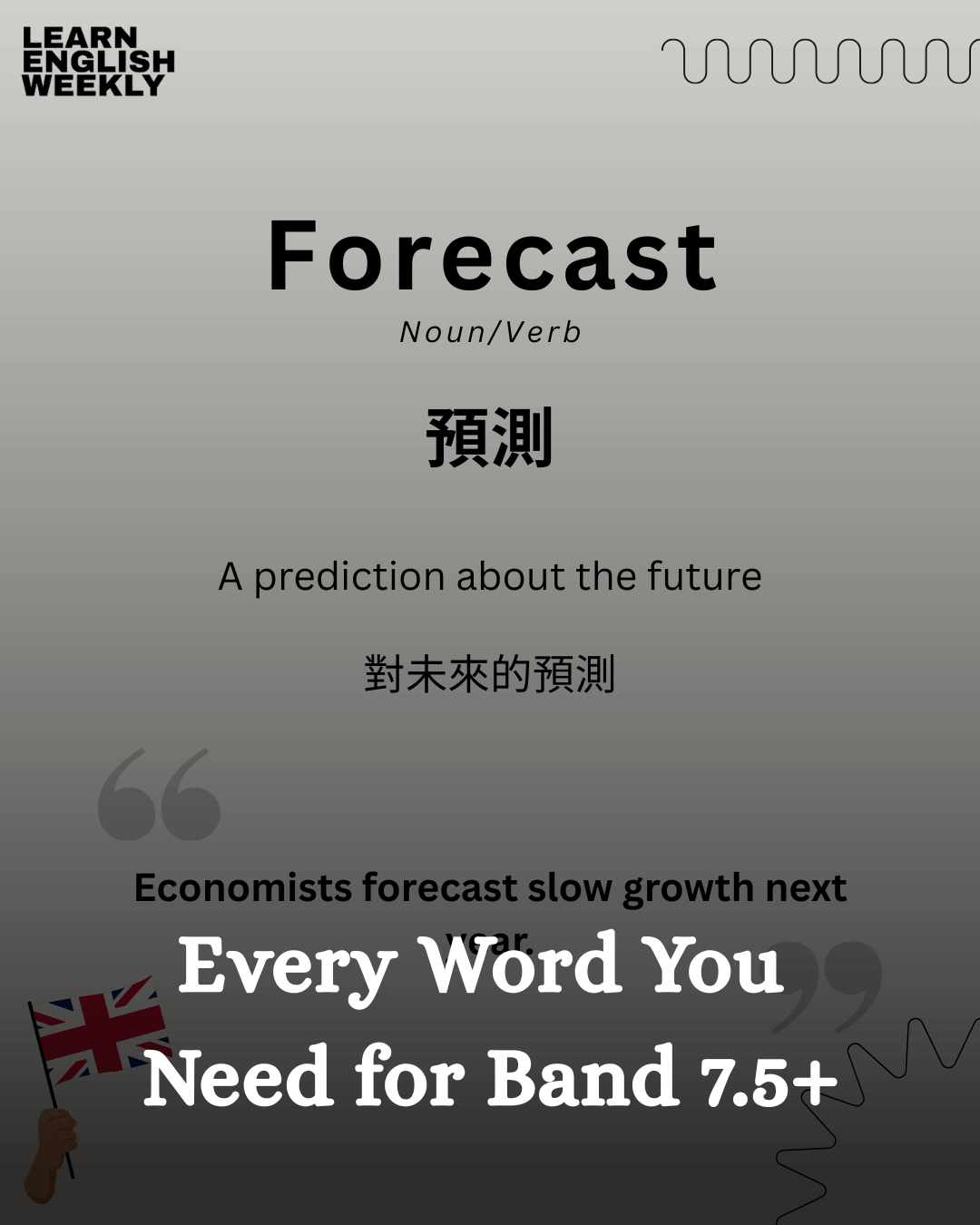
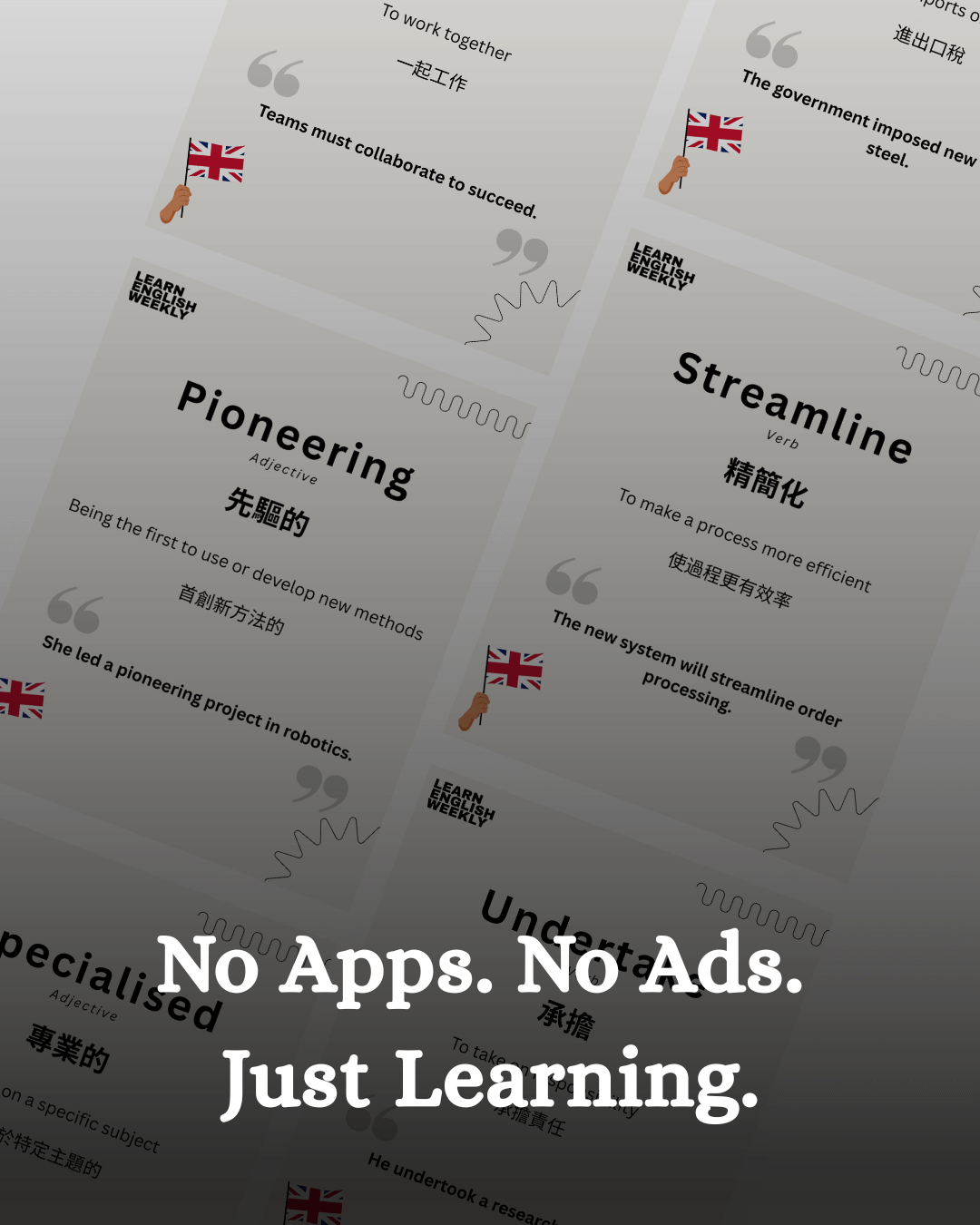
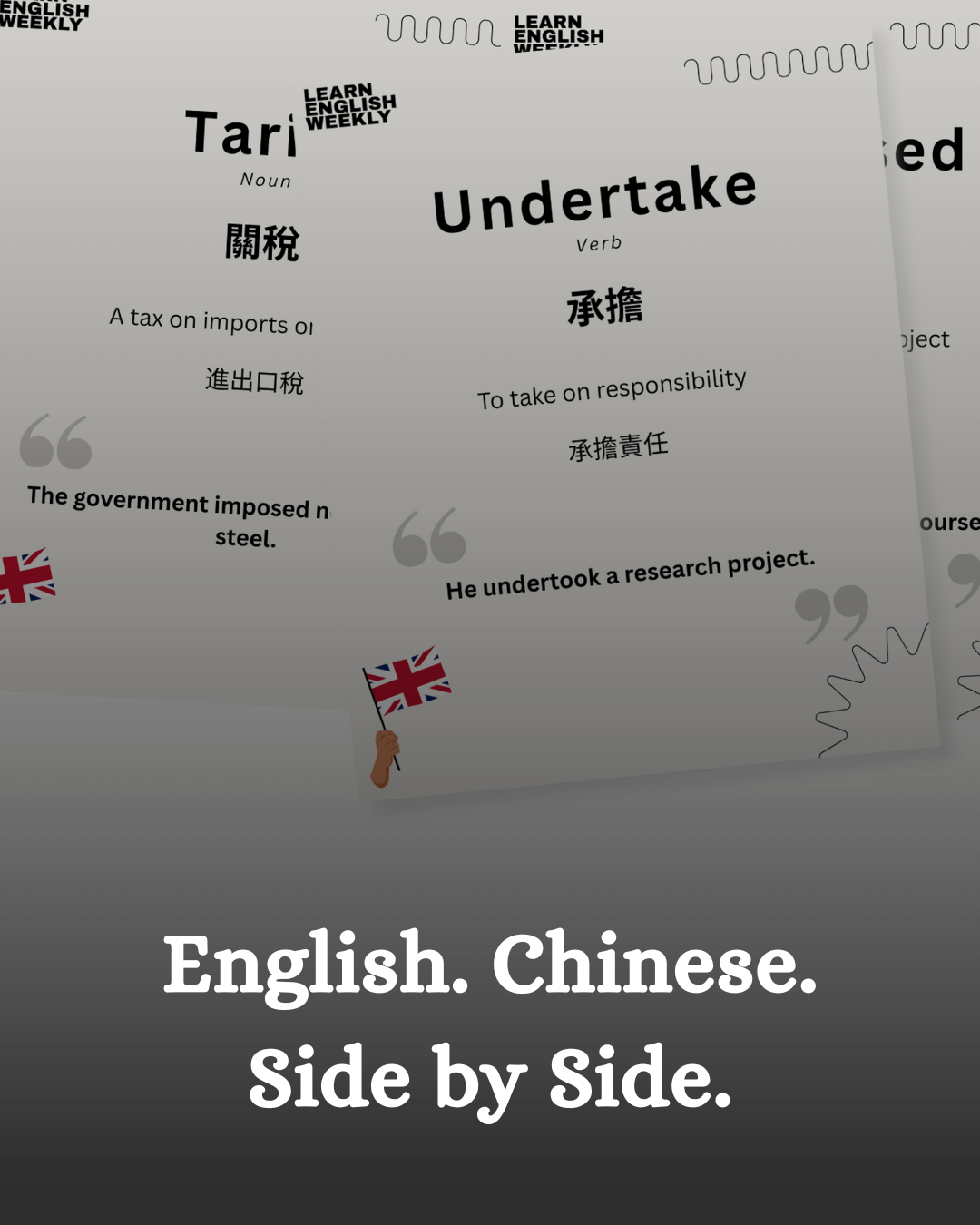
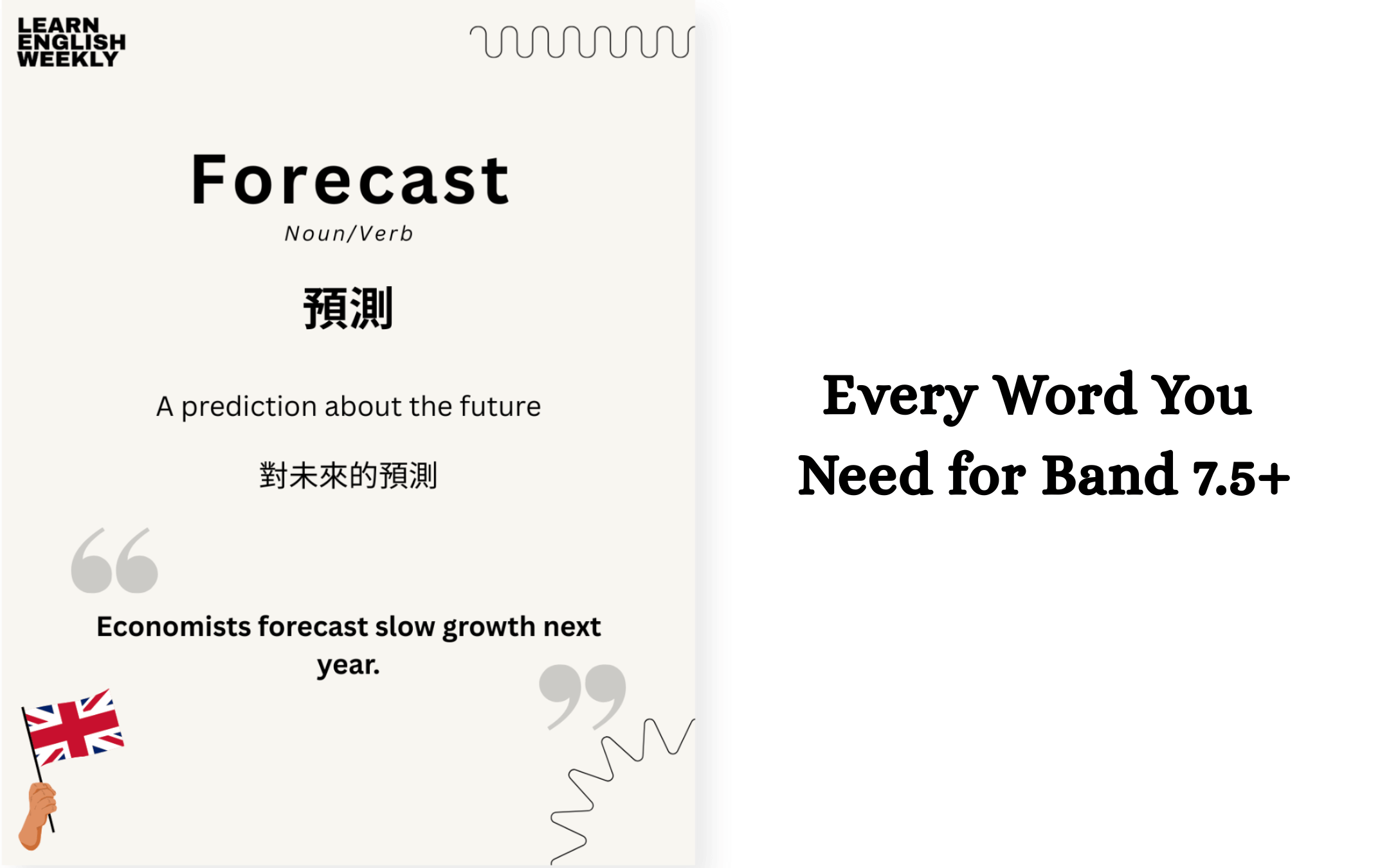
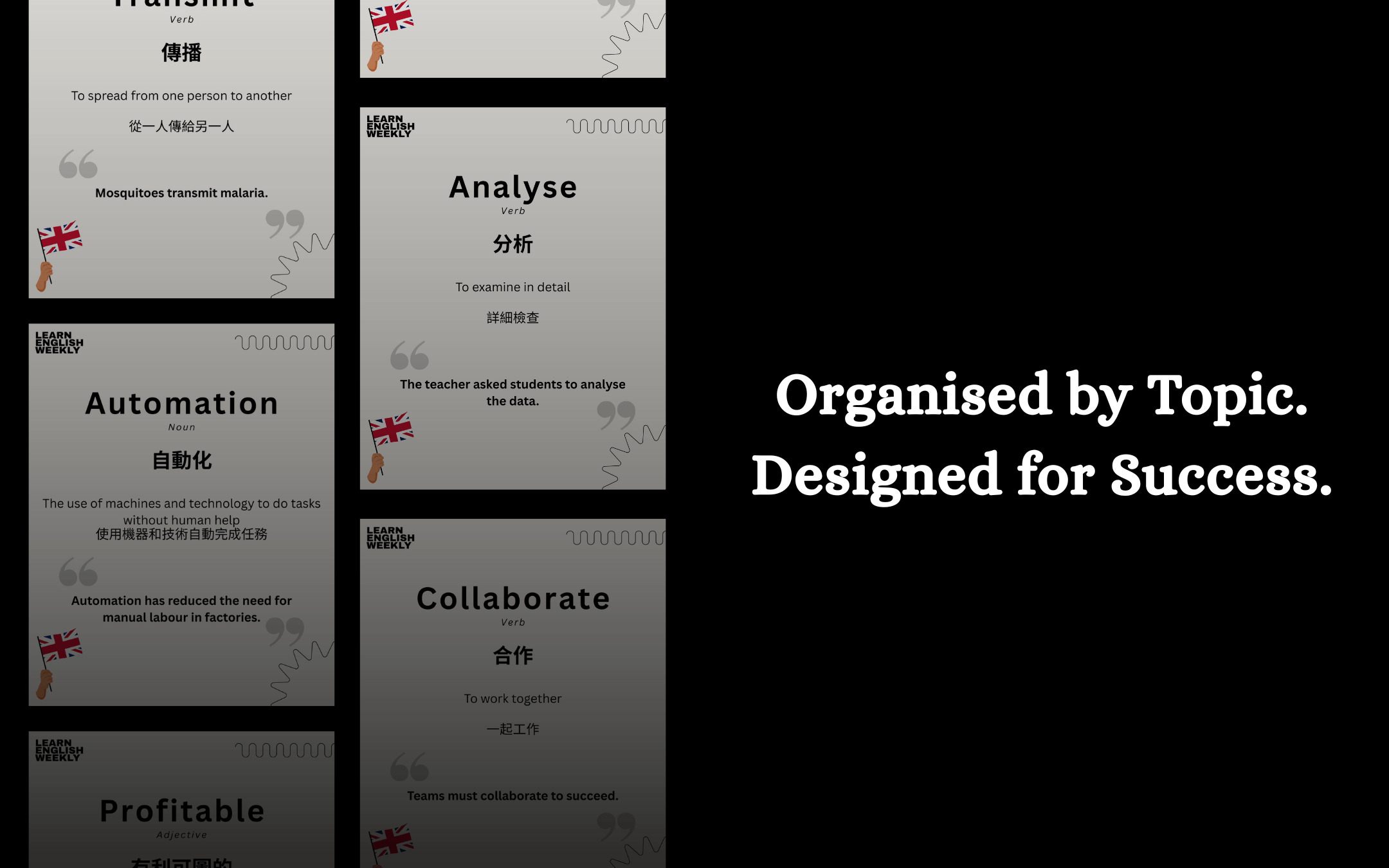
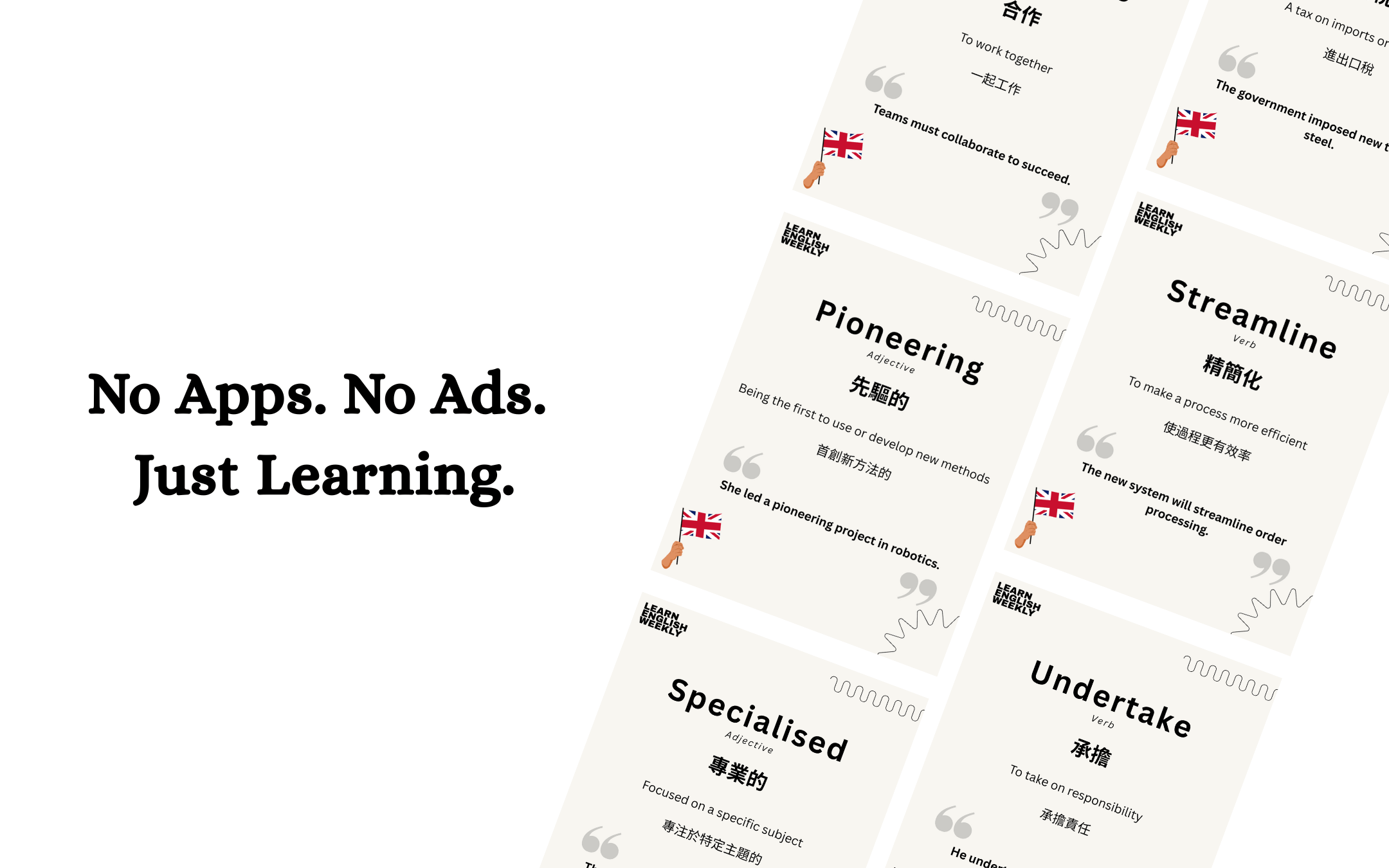
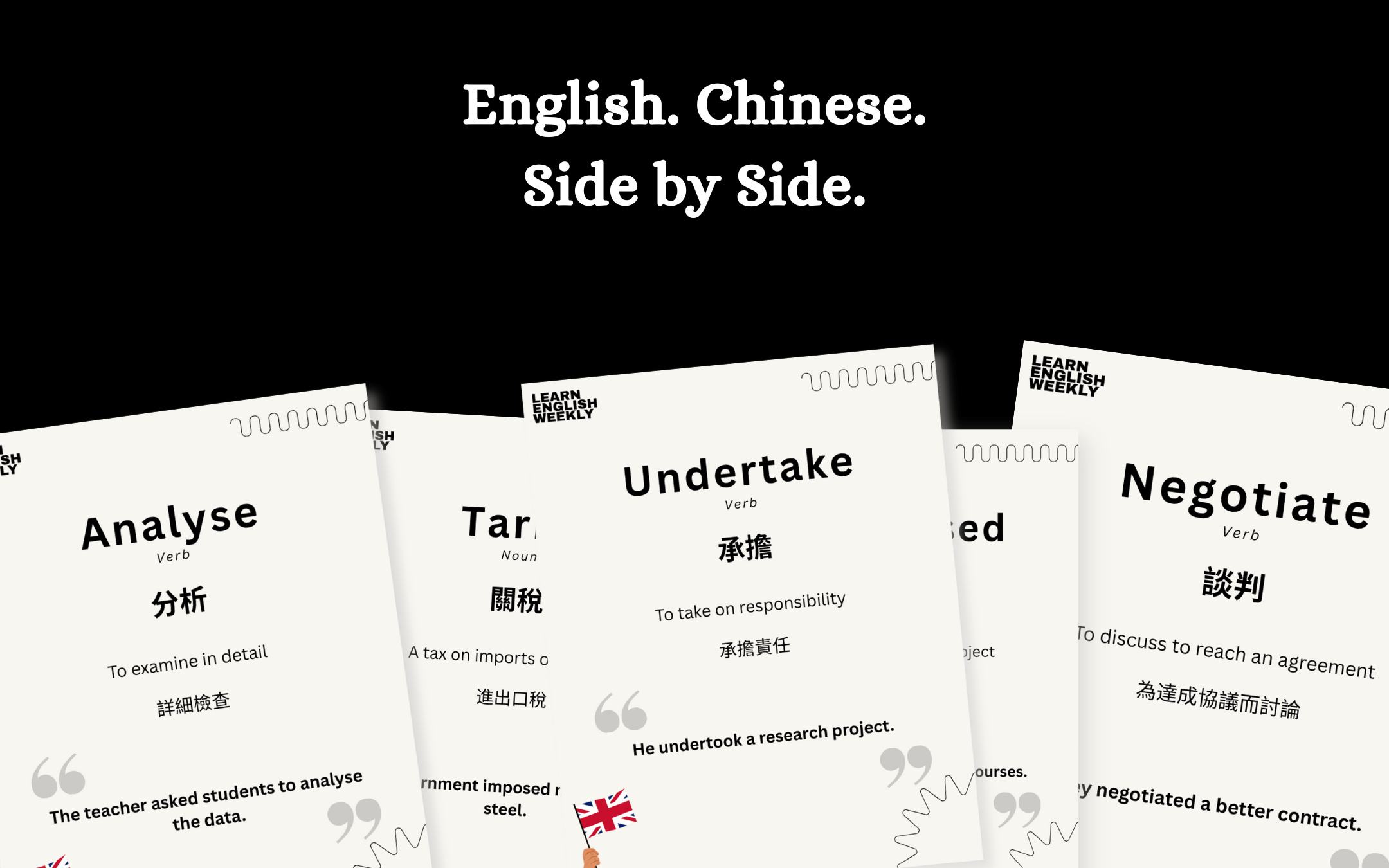
English + Traditional Chinese flashcards with real IELTS example sentences. Remember longer + boost your score. 20 Topics Included.

Education & Learning
Work & Career
Business & Economy
Technology & Innovation
Health & Medicine
Environment & Sustainability
Society & Social Issues
Government & Politics
Crime & Law
Science & Research
Communication & Media
Travel & Tourism
Culture, Art & Literature
Family & Relationships
Psychology & Emotions
Housing & Architecture
Food & Nutrition
Sports & Recreation
Philosophy & Religion
Miscellaneous Vocabulary


Erasmus Schröder, Germany
"This pack changed how I study IELTS vocab. I understand how to use the words now, not just memorise them."

Roy Wilvin, Taiwan
"The bilingual translations make learning so much easier. It definitely helped me get to band 7.5 in two months."

Roei Bahalker, Israel
"Perfect for quick revision before the test. The layout is clear and practical. I use these and watch the social media content, learning more every week!"
At first, this felt benign. We liked seeing old photos, reconnecting with high school classmates, joining groups about sourdough baking. But over time, the platform learned that the fastest way to keep us scrolling was to feed us content that provoked anxiety, envy, or anger.
This performance breeds a quiet exhaustion. We scroll through others’ highlight reels while comparing them to our own behind-the-scenes footage. Depression and loneliness rise in direct proportion to time spent comparing. The platform promised connection but delivered comparison. Perhaps most dangerously, Facebook dismantled the gatekeepers of truth. In the age of newspapers and TV news, there were editors—flawed, yes—but at least bound by professional standards. Facebook replaced them with engagement metrics. A conspiracy theory that gets shares is algorithmically promoted over a fact-checked article that doesn’t.
We don’t just use Facebook anymore. We inhabit it. And that shift—from tool to environment—is the quiet revolution no one voted for. Every feature of Facebook is optimized for one thing: time on site. The infinite scroll, the notification bell, the algorithm that surfaces outrage because outrage gets clicks. These aren’t neutral design choices. They are behavioral engineering. FB.txt
We now live in personalized reality bubbles. Your Facebook feed looks different from your neighbor’s, not just in ads but in fundamental facts. The platform doesn’t intend to deceive—it simply doesn’t care. Truth is not a variable in its optimization equation. Many have tried to leave. Some succeed. But Facebook’s network effects are stronger than any individual will. Your events are there. Your local buy-nothing group. The aunt who only shares photos there. The business page you rely on. Leaving means losing access to parts of your social world.
For now, I’ll assume FB.txt refers to (Meta) and write a deep blog post about its societal impact, evolution, and the philosophical questions it raises. The Infinite Scroll: How Facebook Rewired Human Connection When Facebook launched in 2004 from a Harvard dorm room, it felt like magic. A digital yearbook where you could “poke” friends and post on their walls. Two decades later, that magic has curdled into something more complex: a global nervous system that both unites and fragments, empowers and exploits. At first, this felt benign
The result? A public square where nuance dies and performance thrives. We don’t share thoughts anymore—we broadcast brands. Before Facebook, identity was something you lived. After Facebook, identity became something you performed. Every status update, every curated photo, every carefully worded comment is a bid for validation. The “like” button turned friendship into a market, where social capital is measured in reactions.
Alternatively, if FB.txt is a placeholder for a topic (e.g., Facebook, Fermat's Last Theorem, or something else), let me know the subject, and I’ll write a meaningful post accordingly. This performance breeds a quiet exhaustion
The deepest blog post about Facebook isn’t about features or scandals. It’s about us. About what we lose when we outsource our social lives to a surveillance-driven advertising company. About whether we have the courage to log off long enough to build something real again. If you share the actual content of FB.txt , I’ll tailor the post exactly to that.
This is the quiet trap: monopoly by convenience. Regulation may help. Better digital literacy will be essential. But the deeper solution is philosophical: we need to reclaim the distinction between connection and community. Facebook offers the former—instant, frictionless, shallow. Real community is slow, local, and often inconvenient.

Hi, I’m Jordan, founder of Learn English Weekly.
I’m a TEFL-qualified English teacher with over 7 years of tutoring experience, and I’ve helped hundreds of students achieve IELTS Band 7+ and beyond.
This flashcard pack was designed from real IELTS material and classroom-tested methods that actually work.
Want to talk? You can get in touch here.

Motheeb Akeel, Pakistan
"Each topic is so well organised. I focused on ‘Work and Career’ and could actually use those words in my speaking test. Totally worth it."

Andres Jiménez, Chile
"These flashcards make it so easy to study little by little every day. Highly recommended. ¡Gracias! 🙏"

Shao Hsuan Peng, Taiwan
"I love that everything is explained in both English and Traditional Chinese, perfect for quick understanding. I need to use these words every day at work!"
Take your learning further with these popular English study packs.
Join the community for free resources and other learning opportunities.
No spam — only valuable English learning content.