









Furthermore, the game’s use of environmental storytelling is peerless. The Khar-Toba mission—where the Kushan discover their ancestral ship buried in the sands of Kharak—is a masterclass in archaeology as gameplay. Later, sailing through the ghost ship graveyard, where derelict vessels drift silently, or navigating the asteroid field under the shadow of a galactic core, Homeworld understands that silence is louder than explosions. The minimalist UI, the stark sensor manager view, and the procedural chatter of your own pilots ("Enemy fighter, bearing 2-1-5…") create a documentary realism that makes the violence feel consequential.
More than two decades later, Homeworld Classic remains a singular achievement because it refused to treat its genre as a puzzle box of counters and timings. It understood that strategy games are fundamentally about loss: the loss of units, the loss of time, and the loss of home. By marrying innovative 3D tactics to a narrative of diaspora and grief, Relic created not just a game, but a virtual epic—a silent, drifting monument to the idea that even among the cold stars, the most human thing we can do is try to find our way back.
In the pantheon of video games, real-time strategy (RTS) titles have traditionally been defined by conquest, resource hoarding, and the industrial churn of war machines. From Command & Conquer to StarCraft , the genre’s grammar was built on efficiency: build a base, harvest resources, amass an army, and erase the enemy’s color from the map. But in 1999, Relic Entertainment released Homeworld , a game that understood something profound: the most powerful motivator in the universe is not ambition or greed, but grief. Homeworld did not just introduce a fully 3D tactical space; it introduced a narrative of exile, genocide, and desperate longing that transformed the sterile grid of space combat into a canvas for one of gaming’s most haunting elegies.
In the end, Homeworld is a game about the cost of return. When the Kushan finally reach Hiigara, they discover it occupied by the Taiidan, who view the Kushan as a threat to their own colonial claim. The final battles are not triumphant liberation campaigns; they are grueling, bloody sieges fought against an entrenched empire. The victory is bittersweet. The game closes not with a parade, but with a single, slow zoom towards the planet’s surface as the Mothership descends. The music swells again, not in triumph, but in exhausted relief. Home has been found, but it was paid for with a planet, a culture, and countless lives.
This emotional foundation is shattered halfway through the game in what remains one of the most devastating narrative twists in gaming history. Upon returning to Kharak after a failed hyperspace test, the Kushan find their homeworld burning. The Turanic raiders and the Taiidan Empire have reduced the cradle of their civilization to cinders. There are no dramatic cutscenes of explosions or villainous monologues. Instead, the player receives a single, static image: a sensor screen showing the planet’s atmosphere on fire, with life signs dropping to zero. The mission briefing is a choked whisper: "The subject did not survive." In that moment, the strategic objective shifts irrevocably. You are no longer seeking a new home; you are fleeing the ashes of the old one. Every fighter built, every frigate salvaged, every desperate tactical retreat becomes an act of remembrance.
Mechanically, Homeworld is revolutionary, yet its innovations serve the narrative rather than overshadowing it. The fully 3D battlefield—with its Z-axis and the ability to roll, yaw, and pitch your camera—creates a profound sense of vertigo and vulnerability. Space is not a flat ocean; it is an abyss. Resources are finite, ships are persistent (they carry over from mission to mission), and losses are permanent. A destroyed heavy cruiser is not merely a dip in your resource count; it is the death of a vessel you have nursed through a dozen skirmishes, perhaps since the first jump from Kharak. The game forces the player to experience scarcity and attrition as emotional weight. You become a refugee commander, not a conquering admiral.
At its core, Homeworld is a story of cosmic homelessness. The player commands the Kushan, a people stranded on the desert planet of Kharak, possessing only fragmented legends of a forgotten origin world: "Hiigara." The game’s opening is a masterpiece of minimalist storytelling. As the haunting choral music of Samuel Barber’s Adagio for Strings swells, a voiceover describes the discovery of an ancient starship—the Khar-Toba —and the galactic map found within. There is no hero’s speech, no call to arms. There is only the quiet, solemn realization of a destiny written in stone. The construction of the Mothership is not an act of aggression; it is an act of pilgrimage. This inversion of the typical RTS premise—where you attack because you must—replaces militarism with melancholy.
The AAC Language Lab offers real-life solutions in support of language development. Explore language stages and interactive materials designed for Speech Language Pathologists (SLPs), Educators and Parents. An annual subscription provides full access to all materials including guided lesson plans, an activities section, a language screener, implementation tips and more.
With over 50 years of experience in augmentative and alternative communication (AAC) PRC-Saltillo is pleased to offer this unique online resource.
We have made our service even better with all the new features and a lower price. For just $19.95 a year, you will have access to all of these valuable resources.
Furthermore, the game’s use of environmental storytelling is peerless. The Khar-Toba mission—where the Kushan discover their ancestral ship buried in the sands of Kharak—is a masterclass in archaeology as gameplay. Later, sailing through the ghost ship graveyard, where derelict vessels drift silently, or navigating the asteroid field under the shadow of a galactic core, Homeworld understands that silence is louder than explosions. The minimalist UI, the stark sensor manager view, and the procedural chatter of your own pilots ("Enemy fighter, bearing 2-1-5…") create a documentary realism that makes the violence feel consequential.
More than two decades later, Homeworld Classic remains a singular achievement because it refused to treat its genre as a puzzle box of counters and timings. It understood that strategy games are fundamentally about loss: the loss of units, the loss of time, and the loss of home. By marrying innovative 3D tactics to a narrative of diaspora and grief, Relic created not just a game, but a virtual epic—a silent, drifting monument to the idea that even among the cold stars, the most human thing we can do is try to find our way back. The minimalist UI, the stark sensor manager view,
In the pantheon of video games, real-time strategy (RTS) titles have traditionally been defined by conquest, resource hoarding, and the industrial churn of war machines. From Command & Conquer to StarCraft , the genre’s grammar was built on efficiency: build a base, harvest resources, amass an army, and erase the enemy’s color from the map. But in 1999, Relic Entertainment released Homeworld , a game that understood something profound: the most powerful motivator in the universe is not ambition or greed, but grief. Homeworld did not just introduce a fully 3D tactical space; it introduced a narrative of exile, genocide, and desperate longing that transformed the sterile grid of space combat into a canvas for one of gaming’s most haunting elegies.
In the end, Homeworld is a game about the cost of return. When the Kushan finally reach Hiigara, they discover it occupied by the Taiidan, who view the Kushan as a threat to their own colonial claim. The final battles are not triumphant liberation campaigns; they are grueling, bloody sieges fought against an entrenched empire. The victory is bittersweet. The game closes not with a parade, but with a single, slow zoom towards the planet’s surface as the Mothership descends. The music swells again, not in triumph, but in exhausted relief. Home has been found, but it was paid for with a planet, a culture, and countless lives.
This emotional foundation is shattered halfway through the game in what remains one of the most devastating narrative twists in gaming history. Upon returning to Kharak after a failed hyperspace test, the Kushan find their homeworld burning. The Turanic raiders and the Taiidan Empire have reduced the cradle of their civilization to cinders. There are no dramatic cutscenes of explosions or villainous monologues. Instead, the player receives a single, static image: a sensor screen showing the planet’s atmosphere on fire, with life signs dropping to zero. The mission briefing is a choked whisper: "The subject did not survive." In that moment, the strategic objective shifts irrevocably. You are no longer seeking a new home; you are fleeing the ashes of the old one. Every fighter built, every frigate salvaged, every desperate tactical retreat becomes an act of remembrance. By marrying innovative 3D tactics to a narrative
Mechanically, Homeworld is revolutionary, yet its innovations serve the narrative rather than overshadowing it. The fully 3D battlefield—with its Z-axis and the ability to roll, yaw, and pitch your camera—creates a profound sense of vertigo and vulnerability. Space is not a flat ocean; it is an abyss. Resources are finite, ships are persistent (they carry over from mission to mission), and losses are permanent. A destroyed heavy cruiser is not merely a dip in your resource count; it is the death of a vessel you have nursed through a dozen skirmishes, perhaps since the first jump from Kharak. The game forces the player to experience scarcity and attrition as emotional weight. You become a refugee commander, not a conquering admiral.
At its core, Homeworld is a story of cosmic homelessness. The player commands the Kushan, a people stranded on the desert planet of Kharak, possessing only fragmented legends of a forgotten origin world: "Hiigara." The game’s opening is a masterpiece of minimalist storytelling. As the haunting choral music of Samuel Barber’s Adagio for Strings swells, a voiceover describes the discovery of an ancient starship—the Khar-Toba —and the galactic map found within. There is no hero’s speech, no call to arms. There is only the quiet, solemn realization of a destiny written in stone. The construction of the Mothership is not an act of aggression; it is an act of pilgrimage. This inversion of the typical RTS premise—where you attack because you must—replaces militarism with melancholy.

Students can do a variety of Earth Day related activities.
Stage Four - Add More WordsLearn successful speech strategies with one of our lesson plans

This month we’re exploring how we can send kind, silly, or funny mes...
Stage All - All LevelsGet excited about AAC with activities that make learning fun
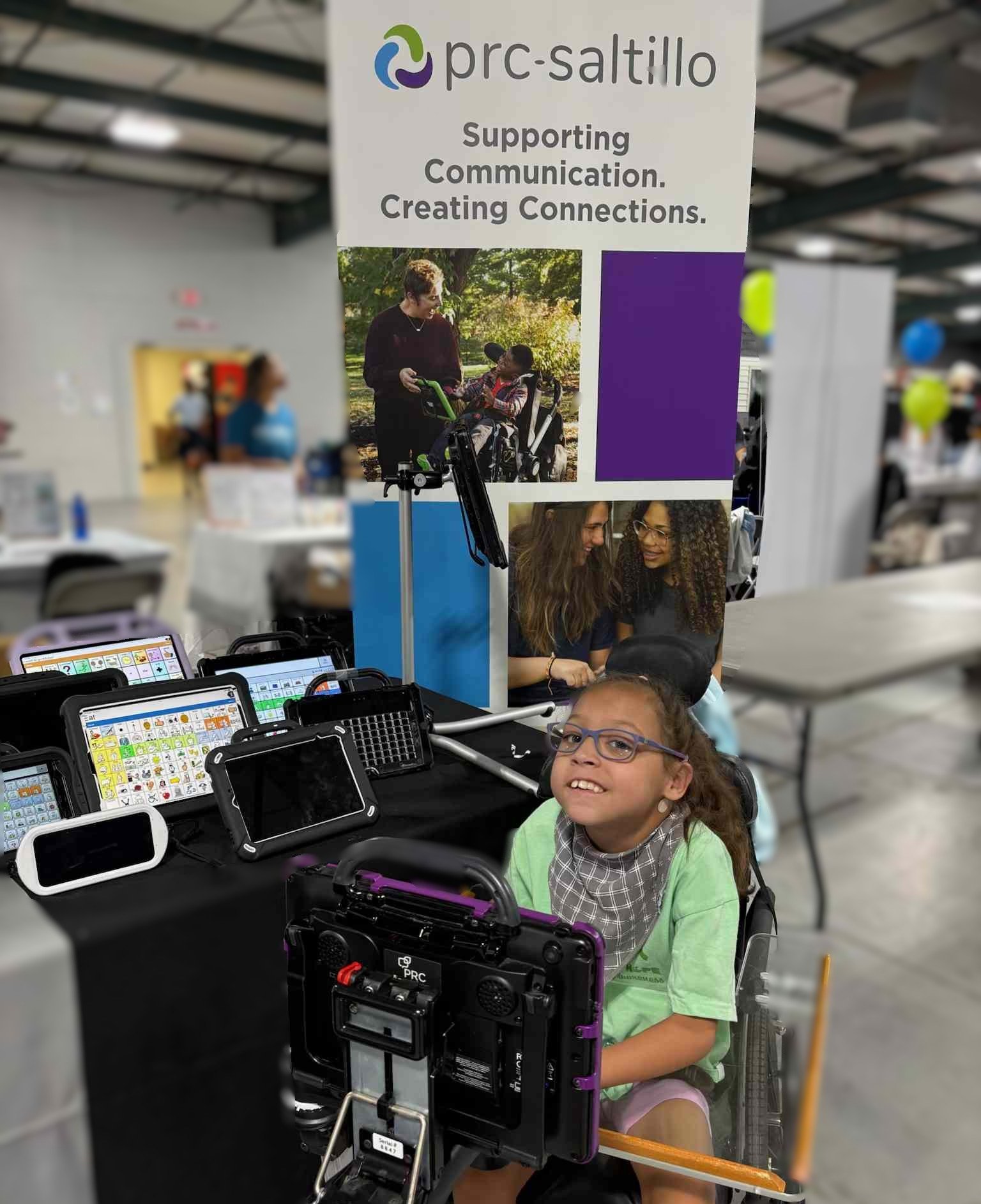
by Naiya Daves, PRC-Saltillo Ambassador This summer I did a 3 w...
Blog Post - Dec 02 2025Read the latest blogs and find out what's going on in the AAC community

The student will speak using single words.
Stage One - Use Single WordsSee this month's most popular lesson plan

Encourage the student to direct the behavior of others using negatives...
Stage One - Express NegativesSee this month's most popular activity